
Green Tea and Fibroids: What Research Suggests
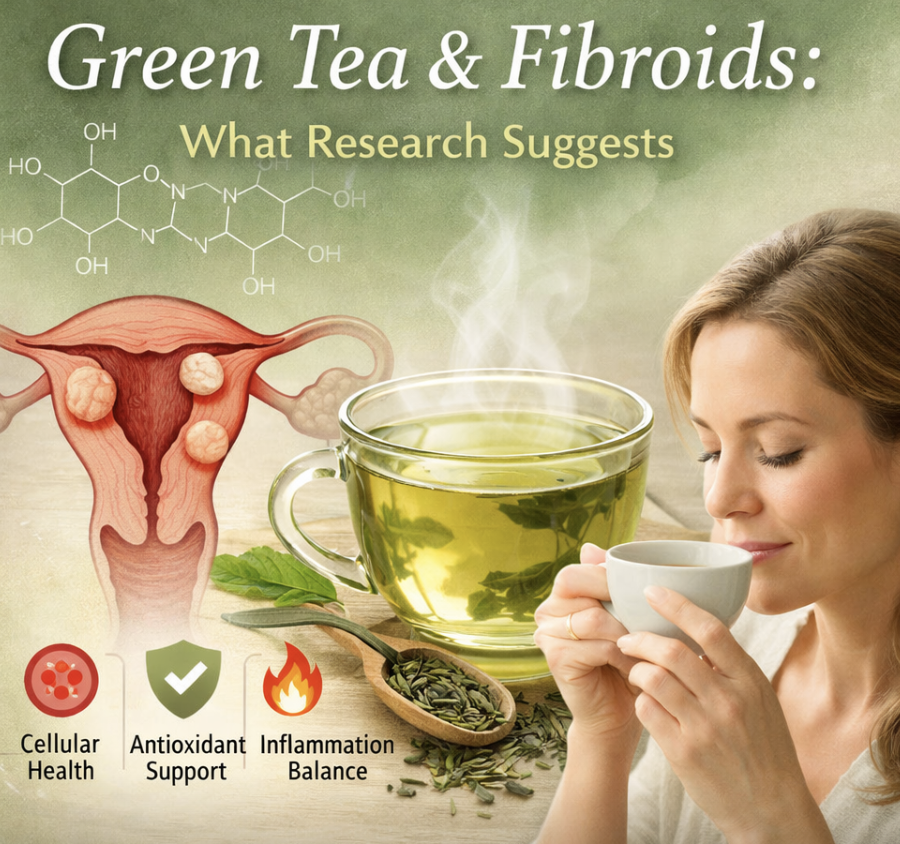
Why Green Tea Has Gained Attention
If you’re exploring natural approaches to support uterine health and overall cycle comfort, green tea has become one of the most discussed botanicals in recent years.
This is largely due to growing research around its active compounds and how they interact with the body. At the center of this interest is EGCG (epigallocatechin gallate), a naturally occurring compound found in green tea.
What Research Says About Green Tea and Fibroids
Green tea has been studied for its potential role in supporting healthy cellular balance.
Research has explored EGCG for its ability to:
Support normal cell function
Influence pathways related to tissue growth
Provide antioxidant support
Studies referenced by institutions such as Johns Hopkins and summaries from the NIH have examined how green tea compounds interact with fibroid-related processes.
In one clinical study published in the International Journal of Women’s Health, participants taking green tea extract over several months experienced changes in fibroid-related measurements along with improvements in reported symptoms and quality of life.
While these findings are still being explored, they have contributed to increased scientific interest in green tea as a supportive botanical.
Why Antioxidants Matter
Fibroids are often discussed alongside:
Oxidative stress
Inflammatory processes
Hormonal signaling patterns
Green tea is rich in antioxidants, which help support the body’s natural balance by:
Reducing oxidative stress
Supporting overall cellular health
Contributing to a more stable internal environment
A Growing Area of Research
The relationship between green tea and fibroid support continues to be studied.
Current research does not position green tea as a treatment, but rather as a plant-based compound of interest in supporting overall wellness and balance.
For those seeking a natural, research-informed approach, green tea offers a unique combination of:
Traditional use
Scientific attention
Daily accessibility
A Practical Consideration
Not all green tea is the same.
Some varieties are higher in caffeine and may feel too stimulating for regular use, especially when used as part of a daily routine.
This is why many herbal formulations choose to work with lower-caffeine green tea, allowing for more consistent and gentle use over time.
Final Thought
Green tea represents a bridge between traditional herbal use and modern scientific research.
As interest continues to grow, it remains one of the most widely studied botanicals in conversations around fibroid-related wellness and overall balance.
A Note on Our Approach
At FaithSelects, we apply this understanding by using a low-caffeine green tea base in our uterine health tea, allowing for a more gentle and consistent daily experience.
Important Note
This information is for general wellness education and is not intended as medical advice or treatment. If you have a medical condition or concerns about fibroids, consult a qualified healthcare provider.
