
Chinese Herbs for Fibroids: What to Know
Chinese herbal medicine approaches fibroids by looking at the whole pattern in the body, not just the fibroids themselves. Fibroids can affect women in very different ways, some have few symptoms, while others deal with heavy periods, clotting, pelvic pressure, cramping, bloating, pain, or a feeling of fullness in the lower abdomen.
In Traditional Chinese Medicine, these symptoms are often linked to blood stagnation, dampness, and blockage. Instead of a one-size-fits-all method, Chinese herbal medicine takes the full picture into account including digestion, energy, stress, and menstrual patterns to support the body's natural flow and balance.
This personalized, holistic approach is one reason Chinese herbs for fibroids continue to resonate today. They're traditionally used to support circulation, ease discomfort, and help the body move out of stagnation, offering women a practical, natural way to support reproductive health.
Common Chinese herbs for fibroids
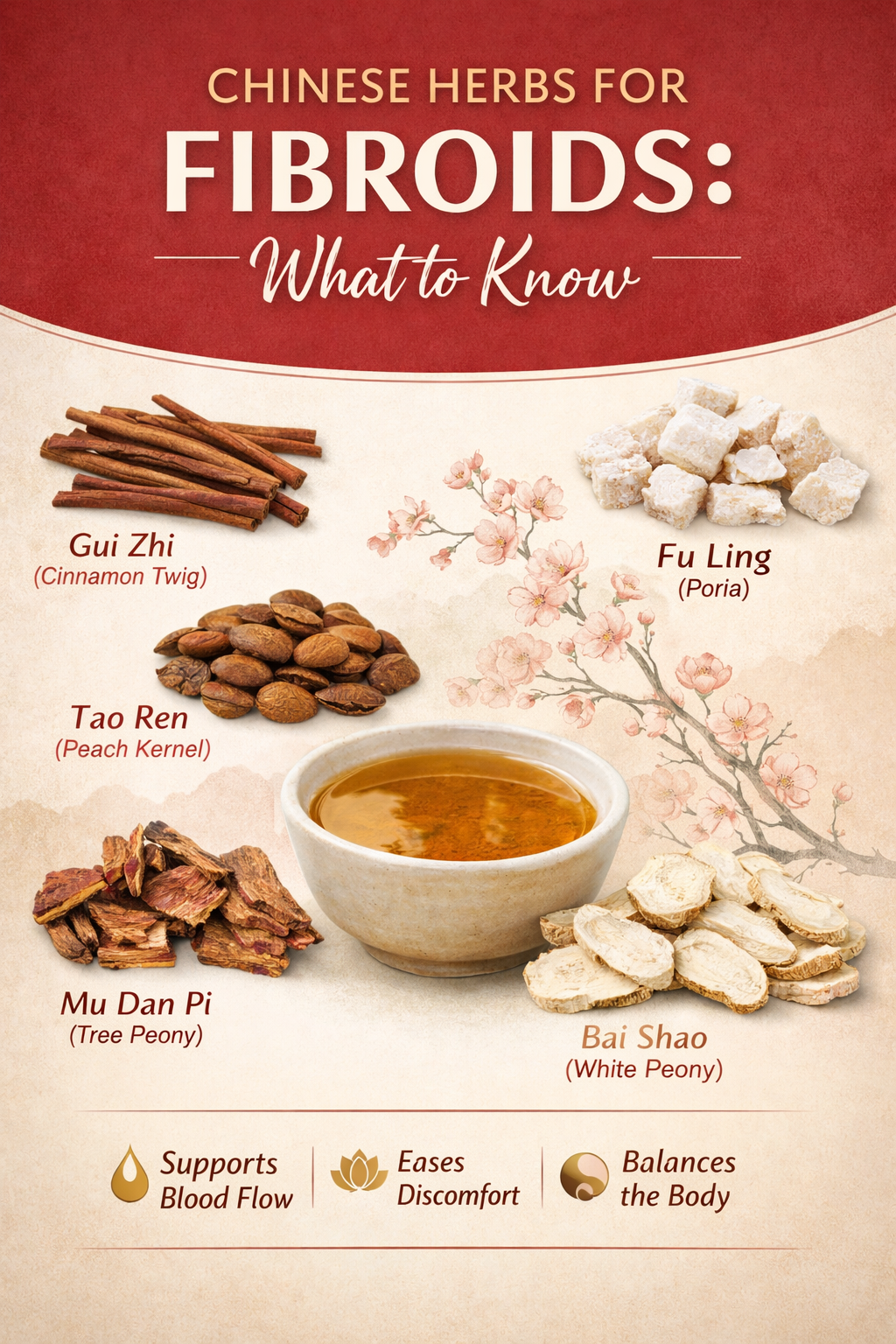
One of the best known Chinese herbal formulas for fibroids is Gui Zhi Fu Ling Wan. This formula includes:
Gui Zhi, or cinnamon twig.
Fu Ling, or Poria.
Tao Ren, or peach kernel.
Mu Dan Pi, or tree peony bark.
Bai Shao, or white peony root.
These herbs are traditionally combined to support circulation, soften areas of blockage, and help ease the feeling of tension or heaviness that many women experience with fibroids.
Why this formula stands out
Gui Zhi Fu Ling Wan (also known as Guizhi Fuling Wan) has been used for centuries and is one of the most researched Chinese herbal formulas for uterine fibroids. Clinical studies show it can reduce fibroid size, improve symptoms like heavy bleeding and pain, and support uterine health, often with good safety when combined with standard care.
A systematic review of animal studies found promising effects on fibroid characteristics and hormone balance, while human trials report symptom relief and fibroid volume reduction by up to 16% in some cases. Its components promote blood circulation, reduce inflammation, and inhibit fibroid cell growth, giving it a strong evidence base for natural fibroid support.
Why herbal tea is such a natural fit
Herbal tea is one of the simplest and most comforting ways to work with herbs. In many traditions, tea is more than a beverage. It is part of a daily wellness ritual. For women's health, tea offers a gentle, consistent way to support balance over time.
Most health conditions, especially chronic ones like fibroids, require long-term care to truly shift the body's patterns. That's where herbal tea fits so well - just one or two cups a day provides a natural, gentle boost to your wellness without overwhelming the system.
Our Uterine Health Tea was inspired by Chinese medicine with scientific support behind it. This thoughtfully crafted blend combines green tea with botanicals traditionally used to support circulation, comfort, and cycle harmony, making it an easy ritual to weave herbal wisdom into your everyday life.A gentle, everyday approach
Closing thought
Chinese herbs for fibroids are often used as part of a broader, pattern-based approach to women’s wellness. Herbs such as Gui Zhi, Fu Ling, Tao Ren, Mu Dan Pi, and Bai Shao remain important because they are part of formulas designed to address the kinds of symptoms many women with fibroids experience. For those looking for a gentle daily ritual, our Uterine Health Tea can be a simple way to connect with that tradition.
Learn More About Our Herbal Formula
This blend was carefully designed using traditional herbal patterns and supportive botanicals. You can learn more about the full formulation here: 👉 [Explore Uterine Health Tea]
